This chapter explores the making of simple buttons - using cut shapes and found objects to make cores; using Dorset button techniques; and wrapping techniques, including the use of tyvek.
This first group are made using cut shapes and found objects to make "buttons" - I'm not sure any of these would made practical buttons. I've treated them as experimental little 3D sculptures, and I haven't tried to finish off the backs beautifully!
3.7.1

3.7.2

3.7.3
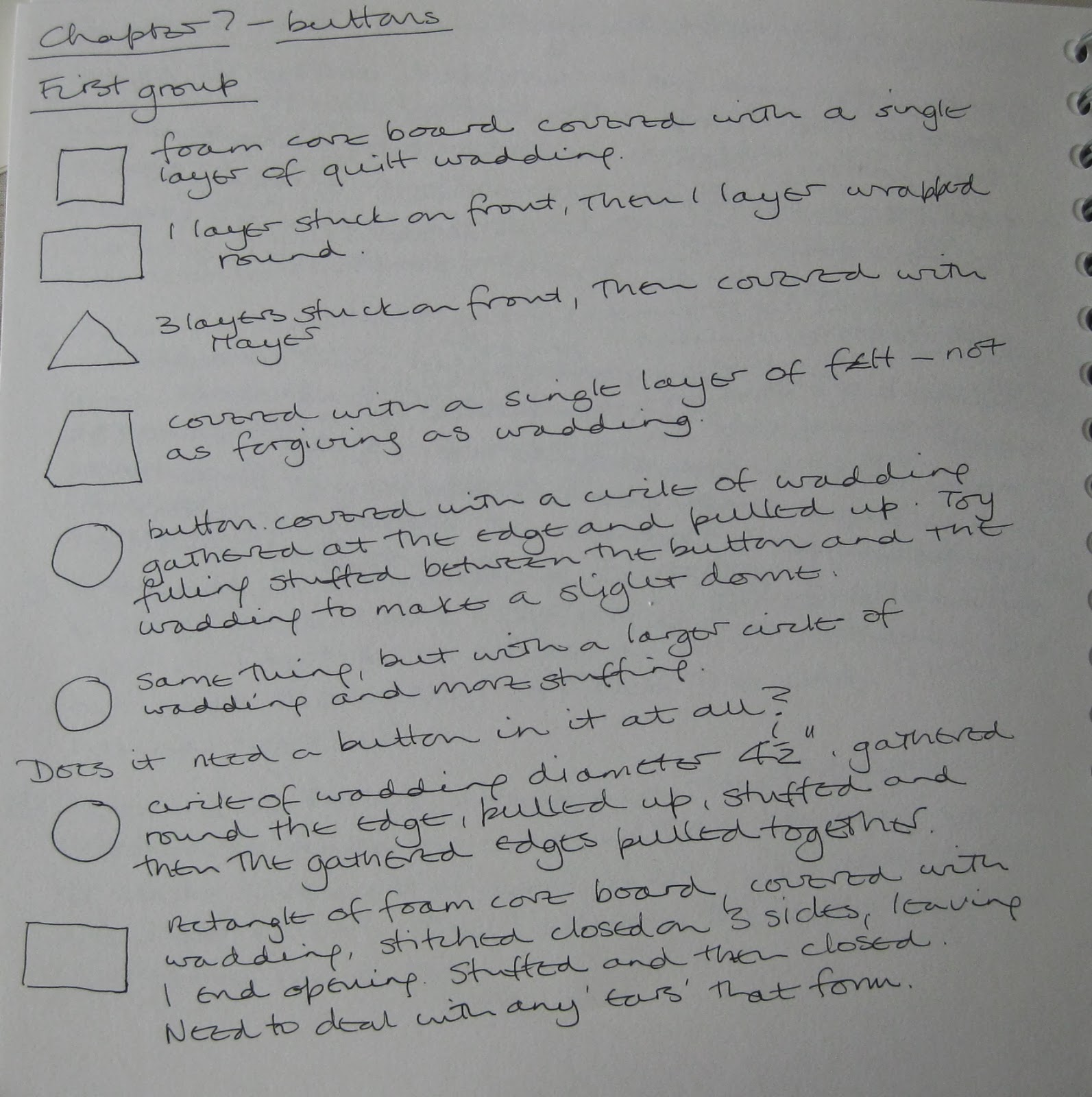
3.7.4

3.7.5

3.7.6

3.7.7

3.7.8

Dorset buttons
The history of Dorset buttons is well documented - see here, and here. This last site has some very good photographs of old and new buttons, which really shows what can be done.
I find it particularly interesting that women could make more money working at home making buttons than working in the fields, and that one benefit was that their clothes and particularly their shoes lasted longer. Women could expect to make two shillings a day making about six or seven dozen buttons, as opposed to ninepence a day working in the fields.
The two smallest buttons in the picture below took me about an hour - I'd need a lot of practice before I could earn two shillings a day!!
I found the whole process quite compulsive, and could have gone on making them for days!
3.7.9

3.7.10

Wrapped buttons
I started off by making some simple wrapped buttons using fabric and threads and then using paper.
3.7.11

3.7.12

Tyvek
I painted a few pieces of tyvek saved from envelopes. I used the same colours of acrylic paint that I used to paint papers earlier in the module.
While I was waiting for the papers to dry, I decided to quickly make two print blocks using funky foam stuck to foam core board. I used a simple spiral, and made a positive and negative block. Once the tyvek was dry (well nearly dry, I'm not very patient, and I could hardly use a hairdryer to speed the process!), I printed one side of all four sheets.
3.7.13

Once I've cut up and zapped the tyvek, I don't expect the patterns to have any impact other than colour changes. If I have any left when I have finished making toggles, I may have a little play!
3.7.14

3.7.15

3.7.16

I do have some painted and printed tyvek left and plan to have a little play in the next few days.


